 The STEM Education Alliance continues to conduct ongoing evaluation across several commands. In addition to NAVSEA's Virginia and Philadelphia outreach efforts, the evaluation team will be evaluating Charleston South Carolina's SPAWAR Systems Atlantic outreach efforts. The team interviewed middle school students, teachers and administrators from three school divisions. Dr. Jamel Donnor, an assistant professor at William and Mary, who specializes in qualitative research design, will work with the evaluation team to analyze data as part of an ongoing process to establish instrument reliability. The final report is expected to be finished at the conclusion of the program year in September 2012.
Focus Groups in Charleston, SC
December 19, 2011 by
2010-2011 VDP Program Evaluation
November 10, 2011 by
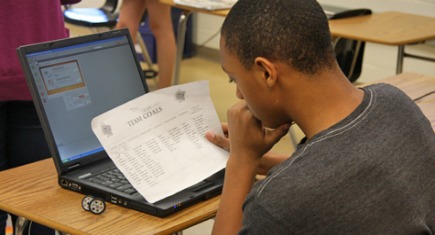 The National Defense Education Program's Virginia Demonstration Project (VDP) is a science, technology, engineering, and mathematics (STEM) outreach program for middle school students. By increasing students' interest in STEM content, the VDP inspires students to become the next generation of scientists and engineers.
The VDP's objectives are met by teaming scientists and engineers from Naval warfare centers with teacher from schools near base facilities. School division partners for FY 2010-2011 included: Stafford, Spotsylvania, King George, Portsmouth, Accomack, Fredericksburg, Virginia Beach and Norfolk.
In order to ensure both the effectiveness of teams as well as provide program fidelity, a combination of direct professional development training from The College of William and Mary, and for the more advanced programs, master teacher training from school divisions, is provided to scientists and engineers (S&Es), and cooperating teachers. The teacher and S&E then collaborate on the delivery of a high energy curriculum (R2: Relevant Robotics) developed to leverage the efficacy of research-based educational techniques, developed around a Five Strands of STEM Instruction model. The strands of an effective STEM Education are composed of five content and five instructional strands, The VDP combines these strands to provide a best practice approach to STEM education into the K-12 setting. Instructional strands include: Inquiry based instruction, co-teaching, carefully-timed explicit instruction, cooperative learning, and thematic or "Big Idea" classroom framework. Each strand of effective STEM instruction is part of a constant balance to maintain an optimal learning environment or diverse classroom. The content strands consist of mathematics, science, technology, engineering and careers. The presence of the S&E in the classroom serves not only as a career connection and positive role model for students, but as a knowledge resource of the teacher, The S&E makes the previously abstract concept of a career in science or engineering tangible, as well as presenting a career in science or engineering in a positive fashion.
In addition to the classroom program, the VDP coordinates and evaluate summer academies, and provides career resources to parents and secondary school counselors. The VDP makes STEM Explore magazines and STEM career poster sets available to school personnel. work force development organizations, community outreach programs, and education conference attendees. The STEM Education Alliance staff provides STEM career outreach through conference presentations, membership in professional organizations, and an integrated social network service, including a resource-rich website, Face book, and Twitter presence. During FY10-11 the STEM Education Alliance represented the efforts of the National Defense Education Program at 57 meetings and conferences.
2010-2011 Classroom Evaluation Highlights
- After participation in the class portion of the VDP, students indicated that they were more likely to pursue a career in science, engineering, or math than they were prior to the VDP.
- African-American, Other Race, and Female subgroups exhibited larger gains in measures indicating their likelihood to pursue a career in science, engineering or math than either the total analysis sample or other subgroups.
2011 Dahlgren Summer Academy Evaluation Highlights
- Students who participated in the Dahlgren Summer Academy indicated they were more likely to pursue a career in science, engineering, or math prior to participation in camp than the general population of students who participated in the VDP in-school program.
2011 Hampton Roads Summer Academy Evaluation Highlights
- Students who participated in the Hampton Roads Summer Academy were more likely to indicate that they would pursue a career in science or engineering.
- Hap tom Roads Summer Academy participants exhibited larger gains in measures indicating their likelihood to pursue a career in science or engineering than participants in the school year program or participants in the Dahlgren Summer Academy.
2011 Longitudinal Study Evaluation Highlights
- Students who participated in the VDP in middle school in 2005 were surveyed in the spring of their senior year in high school. These students indicated that they were more likely to pursue a career in science, engineering, or math than a comparison group of students who had not participated in the VDP.
For more information or questions regarding our 2010-2011 Annual Report and Evaluation, please contact stemeducation@wm.edu.
NEW Career Poster Sets Available
October 28, 2011 by
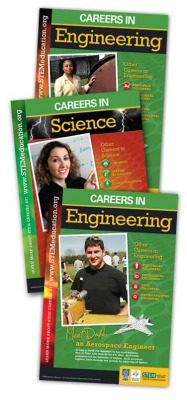 We are pleased to announce the availability of a new set of career posters that complement our EXPLORE Magazine. These three posters depict a career in Science or Engineering. We suggest that posters and magazines be made available in secondary school counselor offices. Other locations include classrooms, and science, technology, or pre-engineering centers. If you would like us to ship poster sets or additional magazines to your location, please email us at stemeducation@wm.edu to provide the number of poster sets and cases of magazines desired, along with a mailing address. All items are free of charge.
STEM Education Alliance receives $2.5 million for STEM Education
October 13, 2011 by
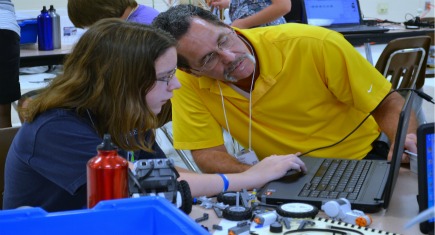 STEM Education Alliance at The College of William and Mary has received a sole-source contract from the Department of Defense for a total of $2.5 million over three years. The first year of the contract is underway, funding science, technology, engineering and math (STEM) outreach. “The alliance plays an important role in advocating STEM careers among today’s youth and preparing them to become tomorrow’s leading scientists and engineers,” said Virginia McLaughlin, dean of the School of Education. This new grant will allow STEM Education Alliance to expand its reach with a combination of face-to-face and distance training.
READ the full article by Erin Zagursky
Climate & Ethics Training at the Norfolk Naval Shipyard
October 4, 2011 by
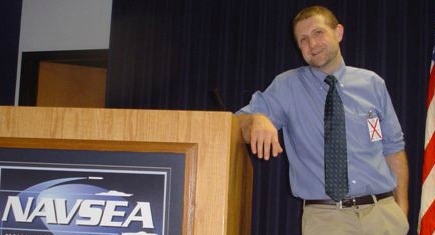 The STEM Education Alliance's first Educational Climate and Ethics workshop for 50 Scientist and Engineers (S&Es) from the Norfolk Naval Shipyard was a huge success. The two day training on September 28-29 included multiple real life scenarios designed to increase the S&Es awareness of potential ethical issues that exist in today's K-12 setting. Through discussion of ethical dilemmas, the S&Es learn key information necessary for safe and productive interaction with students. This will better prepare volunteers for successful in-school experiences through the upcoming school year.
Click Here to View Photos.
Professional Development Training in Charleston, SC
September 9, 2011 by
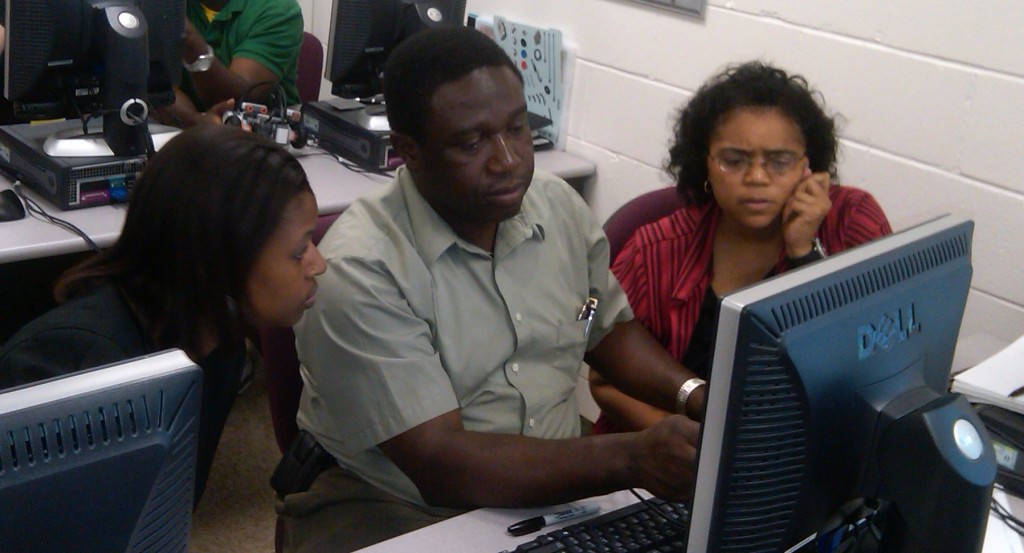 The STEM Education Alliance, in cooperation with the National Defense Education Program (NDEP), provided a professional development training for SPAWAR in Charleston SC on August 8, 9 and 10. The training included two sessions: (1) Educational Climate and Ethics, and (2) Robotics and Advanced Robotics. The Educational climate and ethics training provided military and civilian personnel with an awareness of the ethical issues that exist in the K-12 environment. This training provided the information necessary for safe and productive interaction between military and school personnel with students in a classroom setting. The ethics training was accomplished through the use of real-life ethical dilemmas and a review of practical guidelines for safe school interactions. In addition, the training provided comparison between military and school climate. This comparison prepares scientists, engineers and recruiters for in-school experiences.
The robotics training first provided a general overview of how to build, program and test robots using LEGO Mindstorm NXT 2.0 kits. The robotics training is designed to provide a foundation for scientists, engineers and teachers with which to support students with classroom robotics activities. In addition, the robotics training included information on pedagogy techniques for inquiry-based learning, as well as ways to integrate robotics and inquiry learning into pre-existing curriculum.
To Learn More about SPARWAR Systems Center ATLANTIC Outreach Program.
Hampton Roads Naval STEM Summer Academy
August 30, 2011 by
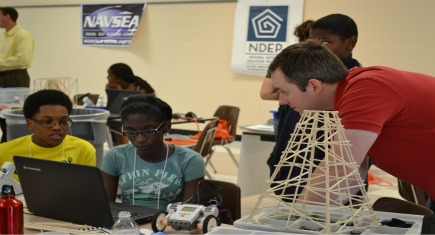 The National Defense Education Program (NDEP) in collaboration with Combat Direction Systems Activity - Dam Neck, Joint Expeditionary Base Little Creek, Norfolk Naval Shipyard, SPAWAR Systems Center Atlantic, and the College of William and Mary, teamed up to host the first annual Hampton Roads Naval STEM Summer Academy. The event was held at the Corporate Landing Middle School in Virginia Beach on July 18 - 21. Forty rising 8th grade students from Virginia Beach, Portsmouth, and Norfolk schools attended the academy to explore challenges related to engineering, robotics, ballistics, rocketry, electronics, and environmental science. These students were assisted by twelve teachers, twelve Scientists and Engineers, and four high school students serving as junior mentors. The academy promoted Science, Technology, Engineering, and Mathematics for middle school students in the Hampton Roads area. The morning of July 20, VIP participants were invited and a tour of the academy was provided to give a history of the program and an overview of the academy.
2011 Dahlgren Summer Academy
August 9, 2011 by
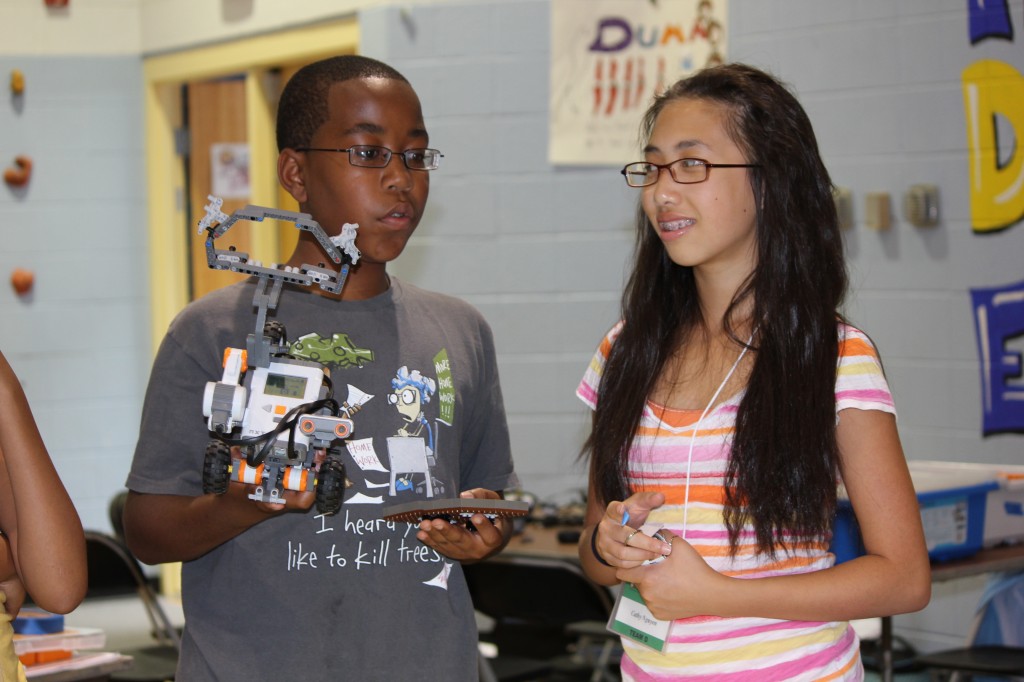 The Naval Surface Warfare Center, Dahlgren Division, has participated in the National Defense Education Program (NDEP) Virginia Demonstration Project (VDP) Summer Academy since 2005. This year the summer academy took place on June 27 - July 1, 2011. Over one hundred rising eighth grade students participated in various STEM activities throughout the week. These activities included team building; tower construction and test; water rockets construction, test, and data analysis; life science; eight different Navy-related robotic missions; human systems integration; design brief preparation and presentation to a VIP panel. Students were assisted by eight junior mentors, seventeen teachers, and twenty Scientists and Engineers.
View Photos
View Article from DCMilitary.com
In the News: The Naval STEM Forum
July 28, 2011 by
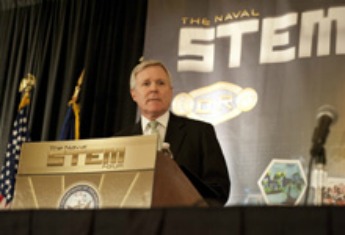 STEM Education Alliance attended the Office of Naval Research's Naval STEM Forum, June 15-16, 2011. One of the keynote speakers was the Secretary of the Navy, Honorable Ray Mabus, who kicked off his speech by talking about his commitment to help increase the Navy's funding towards STEM Education in the years to come. The Department of the Navy’s STEM Roadmap is built around Five Priorities that combine best-in-class experiences for students along-side the needs of the Navy for a STEM workforce pipeline.
Read the complete plan: Download the 2011 Navy STEM Roadmap
View PHOTOS from the forum.
Discovering Velocity in Portsmouth
July 12, 2011 by
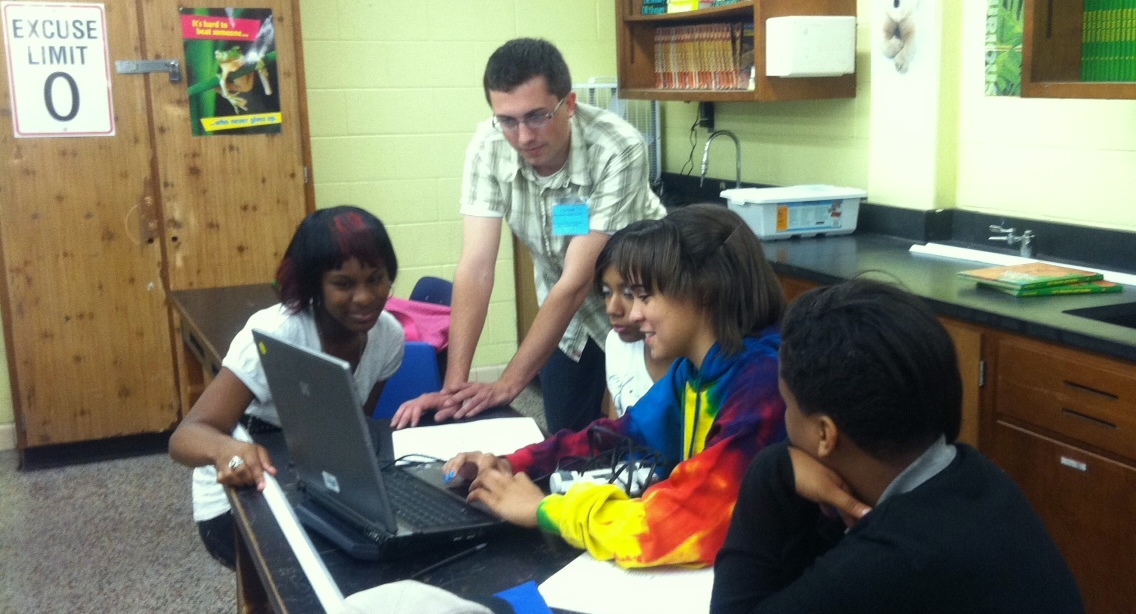 On this day, Portsmouth Middle School Students worked with four Scientists and Engineers from Combat Direction Systems Activity (CDSA)-Dam Neck through the Virginia Demonstration Project. Students used a LEGO robot to understand concepts related to velocity. By measuring the distance a robot traveled in a given time students were able to calculate the speed of the robot. Students also manipulated the "power" setting on the robot to identify how this affected the robot's speed. The Scientists and Engineers worked with the classroom teachers to guide the students through the Velocity challenge and to share information about how robots are used by the Navy.