Research and Best Practices
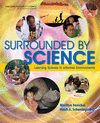 Surrounded by Science: Learning Science in Informal Environments from the National Academies Press, 2010
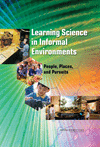
Learning Science in Informal Environments: People, Places, and Pursuits from the the National Academies Press, 2009
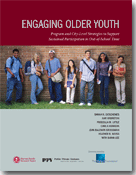
Engaging Older Youth: Program and City-level Strategies to Support Sustained Participation in Out-of-School Time from the Harvard Family Research Project, 2010

Structuring Out of School Time to Improve Academic Achievement from the Institute of Education Sciences (IES), 2009
Web Resources and Informal Science Organizations
InformalScience.org is an online community that strives to support knowledge-sharing, collaboration and innovation among diverse professionals in the field of informal science education and learning. The site features quarterly interviews with leaders in the field, project spotlights and RSS feeds for newly published research, evaluations, calendar events, NSF project funding, and an extensive searchable database.
The Center for Advancement of Informal Science Education (CAISE) works to strengthen and connect the informal science education community and improve informal science education practice, documenting evidence of impact, and communicating the contributions of informal science education.
The Coalition for Science After School is a strategic alliance of individuals and organizations from STEM education, youth development and programs held outside of school time. The mission of the Coalition is to coordinate and mobilize community stakeholders to strengthen and expand opportunities that engage young people in science after school. The website hosts an extensive directory of out of school time projects and provides resources on afterschool science activities and curricula, staff development, and assessment and evaluation
Time Warner Cable launched Connect a Million Minds (CAMM), a five-year program designed to inspire students to pursue learning opportunities and careers in STEM. The program introduces youth to opportunities and resources that inspire them to develop the important science, technology, engineering, and math skills they need to solve the economic, environmental and community challenges of the future.
The National Science Digital Library is a national network dedicated to advancing STEM teaching and learning for all learners, in both formal and informal settings by providing an online library of resources in STEM education and research.
The SEDL National Center for Quality Afterschool Toolkit is designed to give program directors and instructors the resources to build fun, innovative, and academically enriching activities that not only engage students, but extend their knowledge in new ways and increase academic achievement.
The National Science Teachers Association (NSTA) an organization made up of science teachers, science supervisors, administrators, scientists, business and industry representatives, and others involved in and committed to science education; it is committed to promoting excellence and innovation in science teaching and learning for all.
Research and Best Practices
Surrounded by Science: Learning Science in Informal Environments from the National Academies Press, 2010
http://www.nap.edu/catalog.php?record_id=12614
Learning science in informal environments: People, places, and pursuits from the the National Academies Press, 2009
http://www.nap.edu/catalog.php?record_id=12190
Engaging Older Youth: Program and City-level Strategies to Support Sustained Participation in Out-of-School Time from the Harvard Family Research Project, 2010
or http://www.hfrp.org/out-of-school-time
Structuring Out of School Time to Improve Academic Achievement from the Institute of Education Sciences (IES), 2009
http://ies.ed.gov/ncee/wwc/pdf/practiceguides/ost_pg_072109.pdf
Web Resources and Informal Science Organizations
InformalScience.org is an online community that strives to support knowledge-sharing, collaboration and innovation among diverse professionals in the field of informal science education and learning. The site features quarterly interviews with leaders in the field, project spotlights and RSS feeds for newly published research, evaluations, calendar events, NSF project funding, and an extensive searchable database.
The Center for Advancement of Informal Science Education (CAISE) works to strengthen and connect the informal science education community and improve informal science education practice, documenting evidence of impact, and communicating the contributions of informal science education.
http://afterschoolscience.org/
The Coalition for Science After School is a strategic alliance of individuals and organizations from STEM education, youth development and programs held outside of school time. The mission of the Coalition is to coordinate and mobilize community stakeholders to strengthen and expand opportunities that engage young people in science after school.The website hosts an extensive directory of out of school time projects and provides resources on afterschool science activities and curricula, staff development, and assessment and evaluation
http://www.connectamillionminds.com/campaigns/cammww/town-hall/
Time Warner Cable launched Connect a Million Minds (CAMM), a five-year program designed to inspire students to pursue learning opportunities and careers in STEM.The program introduces youth to opportunities and resources that inspire them to develop the important science, technology, engineering, and math skills they need to solve the economic, environmental and community challenges of the future.
The National Science Digital Library is a national network dedicated to advancing STEM teaching and learning for all learners, in both formal and informal settings by providing an online library of resources in STEM education and research.
http://www.sedl.org/afterschool/toolkits/about_toolkits.html?tab=science
The SEDL National Center for Quality Afterschool Toolkit is designed to give program directors and instructors the resources to build fun, innovative, and academically enriching activities that not only engage students, but extend their knowledge in new ways and increase academic achievement.
http://www.nsta.org/portals/informal.aspx
The National Science Teachers Association (NSTA) an organization made up of science teachers, science supervisors, administrators, scientists, business and industry representatives, and others involved in and committed to science education; it is committed to promoting excellence and innovation in science teaching and learning for all.